Mission
To reduce criminal opportunity and accelerate lawful response by linking communities, clients, private operatives and law enforcement into one coordinated watch — across streets, cities and borders.
Canadian Security Force began with an observation that is still true today: most crime is solved — or missed — in the first hour, by the people closest to it. A guard on a gate, a neighbour on a balcony, a shopkeeper with a camera. What those people see rarely reaches the desk that could act on it.
We were formed to be that bridge, and then to build it at scale. What started as a single regional guarding operation grew into a consortium that coordinates with police services, national Interpol bureaux, neighbourhood watch associations and licensed private operators. Today we operate regional desks across five continents, run a 24-hour control room, and train community volunteers who feed verified observation into the formal reporting chain.
We are deliberately structured as a federation rather than a single force. Each regional desk understands its own jurisdiction, its own laws, and its own police partners. The consortium standards — vetting, training, reporting, evidence handling and data protection — are common to all of them.
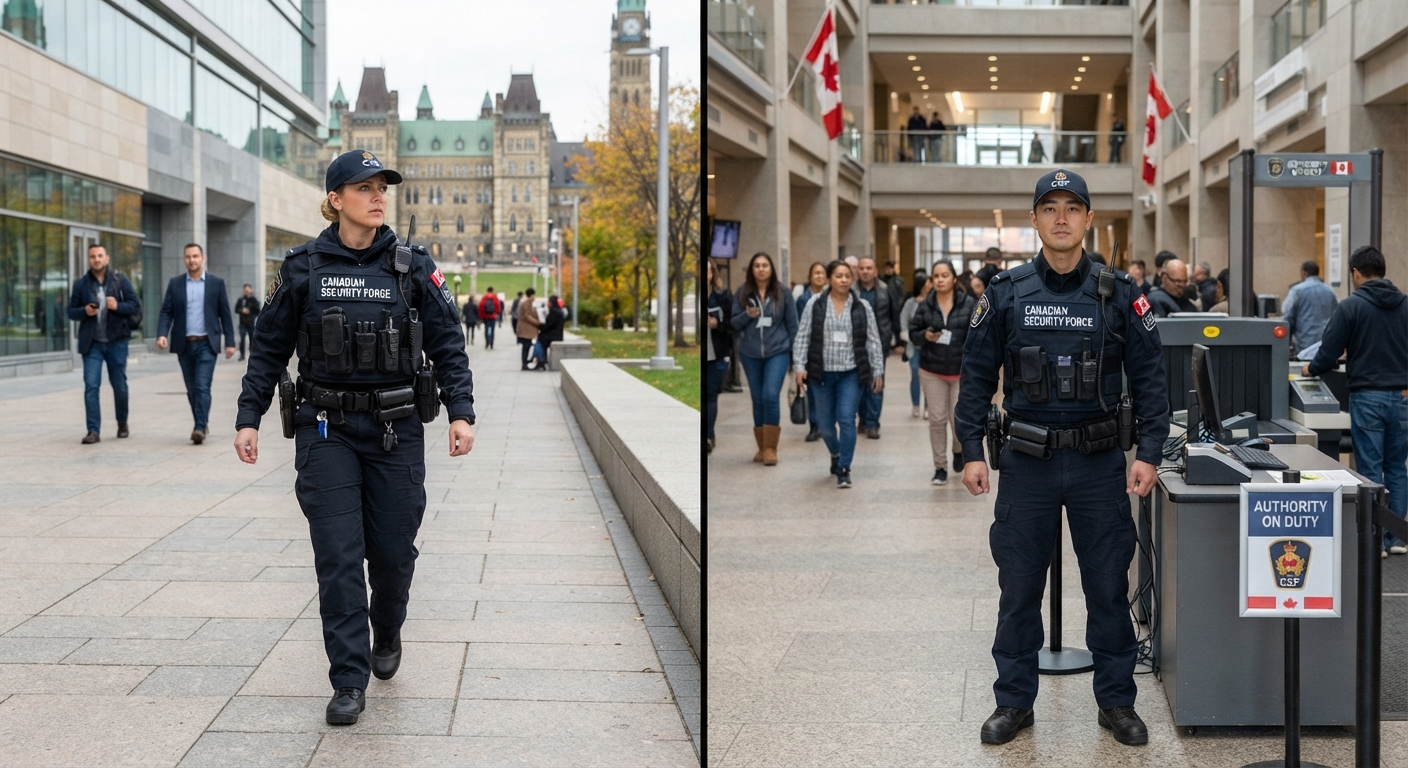
An officer on an CSF post does four things: observes, records, de-escalates and escalates. Arrest is not on the list, because we hold no power of arrest. Restraint is not on the list, because a private officer restraining a person without lawful authority is committing an offence.
What remains is the part that actually reduces crime: being present, being awake, writing down what happened accurately, and knowing exactly who to call. It is less dramatic than television suggests, and considerably more effective.
A licensed private security and intelligence consortium that observes, deters, documents and coordinates — and hands to the proper authority everything that requires police powers we do not have and do not claim.
To reduce criminal opportunity and accelerate lawful response by linking communities, clients, private operatives and law enforcement into one coordinated watch — across streets, cities and borders.
A world in which a criminal network cannot find a jurisdiction, a district or a street where nobody is watching, nobody is recording, and nobody is ready to respond.
Every action is grounded in the law of the jurisdiction where it happens. Where the law is silent, we do not proceed.
We use the least intrusive method that works. A conversation before a camera; a camera before a confrontation.
Every action is logged, every officer is identified, every complaint is investigated by someone independent of the officer concerned.
Reports, identities and client data are held on a need-to-know basis and shared only where the law or an active investigation requires it.
Canadian Security Force is governed by a consortium council made up of the regional desk directors, an independent legal adviser, and two non-executive members drawn from community and civil-liberty backgrounds. The council meets quarterly.
Three committees report to it:
We cooperate fully with police and Interpol and we are directed by neither. A request from any agency is answered only where it is lawful, proportionate and properly documented — and refusals are recorded.
| Function | Responsibility | Reports to |
|---|---|---|
| Group Director | Overall consortium strategy, external relations, final escalation authority | Consortium Council |
| Director of Operations | Regional desks, patrol deployment, response performance | Group Director |
| Head of Intelligence | Fusion desk, threat briefings, liaison with police intelligence units | Group Director |
| Head of Training | Academy curricula, certification, refresher cycles | Standards Committee |
| Head of Technology | Control room, camera estates, encryption, data protection | Data Protection Committee |
| Community Liaison Lead | Neighbourhood watch development and volunteer welfare | Director of Operations |
| Compliance & Ethics Officer | Complaints, audits, regulatory filings | Ethics Committee |
An officer's authority at a gate or on a patrol comes from the public's trust. It is never used for personal gain, personal grievance, or the advantage of a client over a non-client.
No arrest, no search, no detention, no entry without lawful authority. When a situation demands police powers, we contain, observe and summon.
Race, religion, ethnicity, gender, disability, age, nationality or political opinion have no bearing on how a person is treated, stopped, watched or reported.
Reports describe what was observed and nothing more. Conclusions are labelled as opinion. Uncertainty is stated rather than smoothed away.
Cases involving children, victims of violence, or people in distress are escalated immediately and handled with additional safeguards.
Anyone may complain about an CSF officer and receive a written response within a stated period. Findings are published in anonymised form in our quarterly review.