Recognition
A resident who has been on the same street for years can tell instantly that a person or vehicle does not belong. Software struggles with that; familiarity does it automatically.
A camera records. A neighbour notices. The difference matters, because most crimes in residential areas are stopped — or prevented entirely — at the point where an offender believes they are being observed by someone who will act on it.
A resident who has been on the same street for years can tell instantly that a person or vehicle does not belong. Software struggles with that; familiarity does it automatically.
Watch signage, well-lit entrances and visible neighbour contact change the offender's calculation. Burglars choose the house with no witnesses, not the one on a street where three people would notice.
One verified report from a watch coordinator carries more weight than ten anonymous calls. It arrives structured, with a time, a description and a callback — which is exactly what dispatch needs.
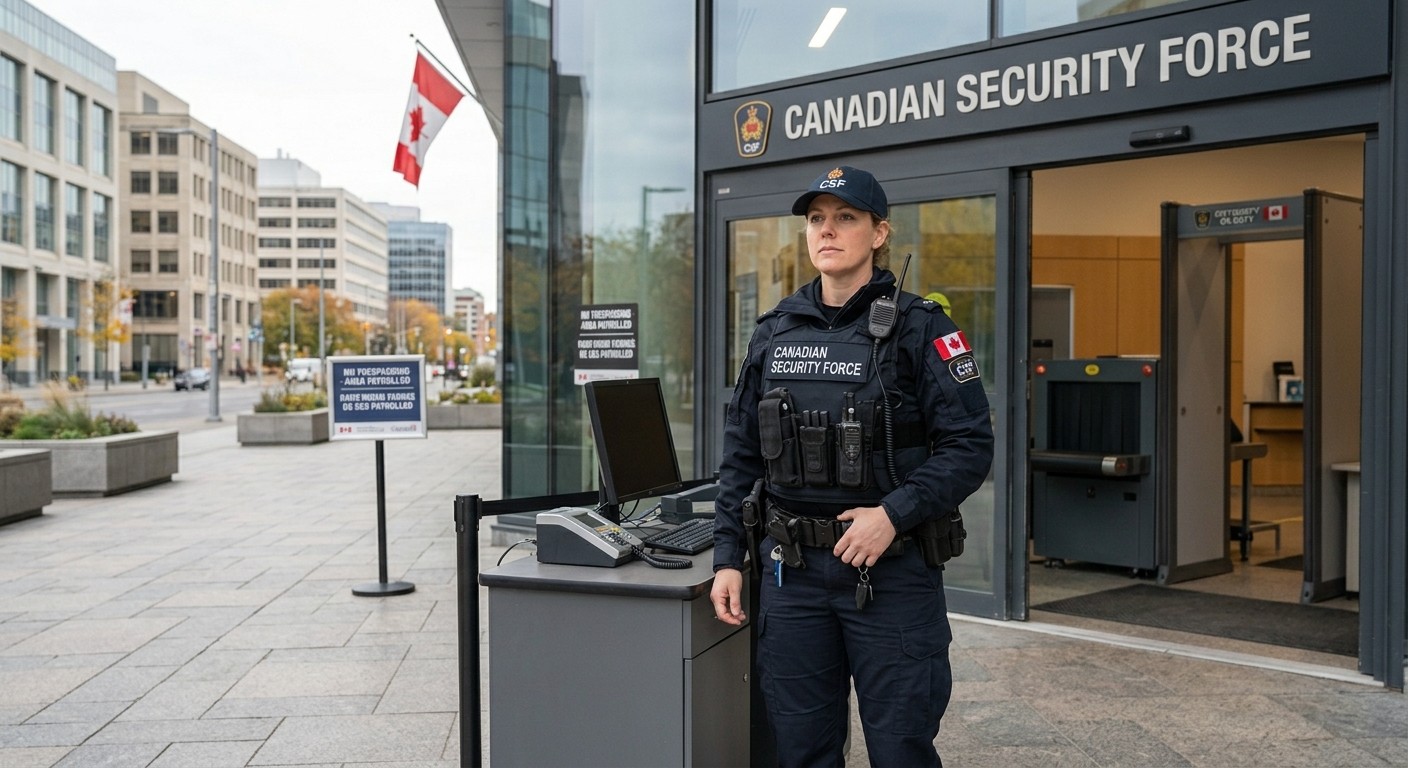
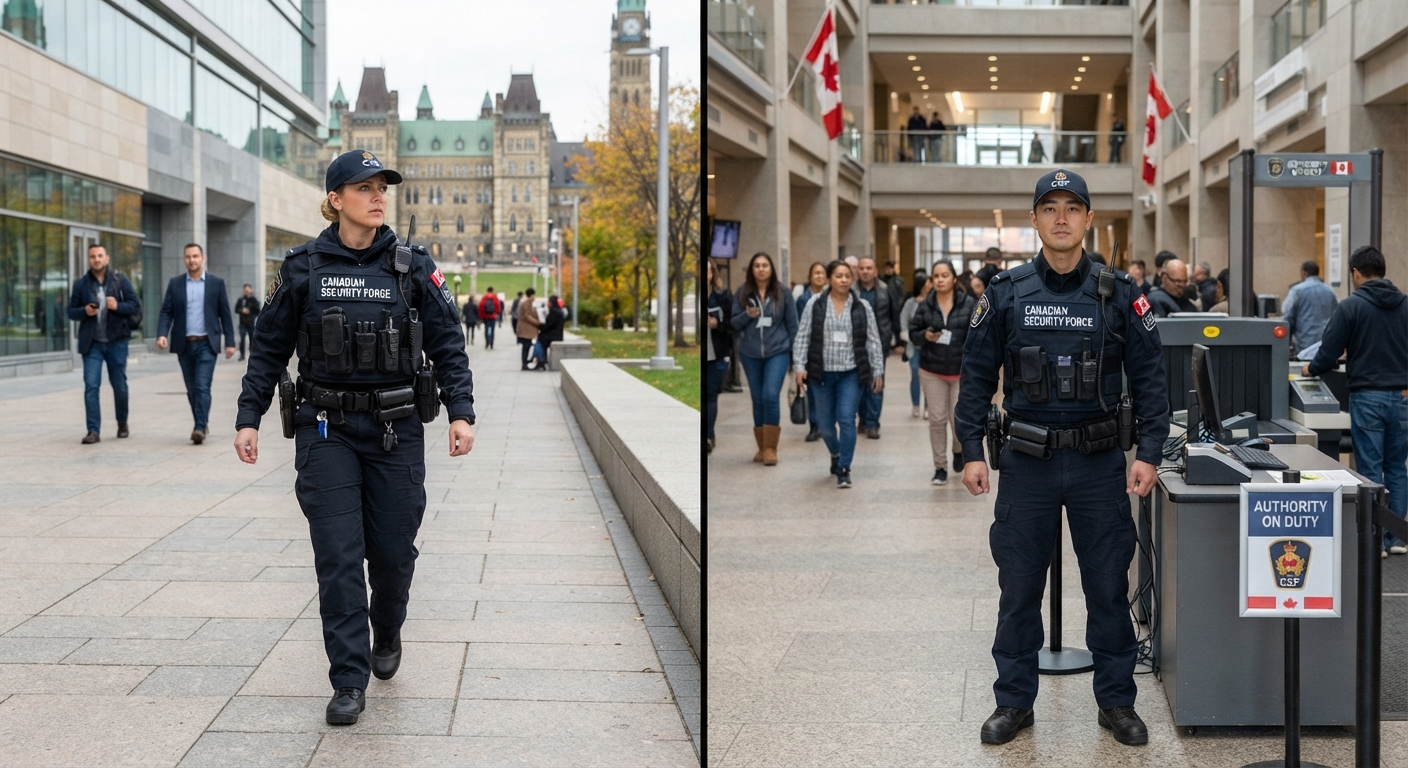
Watch members observe and report. They never confront, chase, detain or detain-in-effect. A volunteer is not a police officer and must not behave like one. Any scheme that breaches this is suspended immediately by Canadian Security Force and reported to the local police.
| Role | Does | Commitment |
|---|---|---|
| Scheme Coordinator | Liaises with police and CSF; runs briefings; keeps the contact list | 4–6 hrs/month |
| Street Captain | Checks on neighbours, passes reports up, welcomes newcomers | 2 hrs/month |
| Member | Observes, reports, attends briefings, keeps contact details current | Minimal |
| Camera Contact | Knows which homes and shops have coverage; helps retrieve footage lawfully on request | On request |
| Vulnerable-Resident Contact | Checks on elderly or isolated neighbours; keeps a welfare list | 1–2 hrs/month |
Foundation training, the reporting format, signage artwork, the control-room channel, coordination with police, and liability guidance. We do not require residents to buy a security contract to have a watch scheme.
| Field | Example | Why it matters |
|---|---|---|
| Time observed | “02:14, Wednesday morning” | Anchors the report to camera coverage and patrol positions |
| Exact location | “Corner of 4th Avenue and Market Lane, by the transformer” | Dispatch needs a point, not a neighbourhood |
| What was seen | “Two men walking slowly, one looking into parked cars with a torch” | Behaviour, not conclusions |
| Description | Height, build, clothing, distinguishing features, direction of travel | The details people forget first are the ones that identify |
| Vehicle | Colour, make, plate (even partial), damage | Partial plates still match in search |
| Reporter | Name and number, or “anonymous” | Clarification is often needed; anonymity is always accepted |
No, and the distinction is absolute. Vigilantism means taking enforcement into your own hands. A watch scheme means observing, recording and reporting, and leaving enforcement to those with the legal power and the training to do it safely.
No. Most members simply keep an eye out from their own home, report anything unusual, and check on a neighbour. Foot patrol is optional and always in pairs.
Yes. Anonymous reports are accepted and acted upon. We will tell you plainly what anonymity costs: we cannot come back to you for a clarifying detail, and the report carries less weight with some agencies.
Reports describe behaviour, not people. A report that turns out to have an innocent explanation is closed with no consequence and no record against anyone. Good watch schemes protect everyone on the street, including the person who was wrongly suspected.
A camera may film your own property and public space. It must not film into a neighbour's window or private yard. Watch schemes agree a camera policy in writing — the template is in the Technology page section on data protection.
Individual members remain responsible for their own lawful conduct. Canadian Security Force carries public liability for its own officers and activities, provides written guidance on the limits of watch activity, and suspends any scheme that departs from the charter. We recommend every scheme confirm its position with the local police before starting.
Yes. The same structure applies with different roles — a market watch, a school-gate watch, a worship-centre watch. The reporting format and the no-confrontation rule stay identical.