What each service actually includes
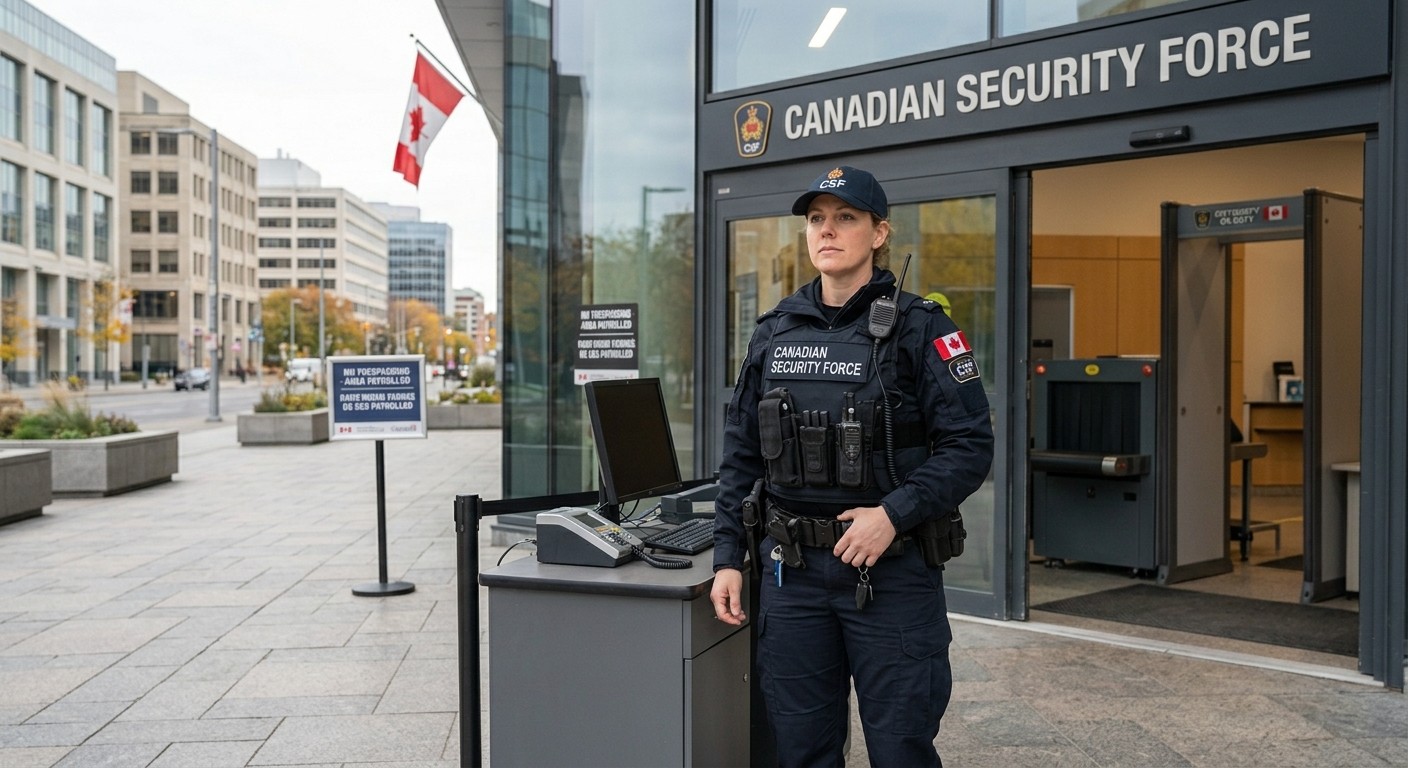
What a post actually looks like
A guard post is not a person sitting in a chair. It is a written procedure with a person executing it: who may enter, what is checked, what is recorded, who is called when something is wrong, and how quickly.
Every officer on a post carries a radio or phone link to the control room, keeps an occurrence record to consortium standard, and knows the escalation path for that specific site — because the answer to "who do I call" differs between a school, a warehouse and a bank.
Where a post needs a second pair of eyes on something we are not licensed to do, we hand it to the police rather than improvising.
Below, every service line is explained in full: what it covers, what it does not cover, and how it connects to police or consortium partners.
1. Manned guarding & static security
What it is. Trained, vetted officers posted at a fixed location — a gate, a lobby, a warehouse door, a construction compound — controlling who and what comes in and goes out.
What's included. Access control and visitor logging; vehicle and consignment checks; key and seal control; hourly patrol notation via checkpoint tags or a smartphone app; a written occurrence book kept to consortium standard; immediate control-room escalation of any incident.
What it is not. A guard is not a police officer, an investigator or a crowd-control specialist. Where force or detention would be required, the officer observes, withdraws to safety and calls for the proper authority.
Best for. Estates, factories, banks, hospitals, schools, places of worship, data centres, and any site with a defined perimeter.
2. Mobile patrol & rapid response
What it is. Marked or unmarked patrol vehicles covering a defined beat on a randomised schedule, plus alarm-driven response to client premises.
What's included. GPS-tracked patrol routes with randomised timings so they cannot be predicted; alarm activation response with a target arrival window; perimeter checks and lock-up verification; a report per visit; direct radio or phone link to the control room.
Why randomise. A patrol that arrives at 02:00 every night is a schedule an offender can work around. Randomisation is the core of the deterrent.
Best for. Business parks, out-of-hours retail, unoccupied properties, estates sharing a response contract.
3. Escort, convoy & close protection
What it is. Trained officers accompanying people or goods through elevated-risk routes — cash runs, high-value cargo, executive travel, media crews in difficult locations.
What's included. Advance route reconnaissance and risk grading; timings and alternative routes; convoy discipline and radio protocol; liaison with local police along the corridor; a post-journey debrief with route notes.
Limits. We do not cross a border with firearms or protective equipment without the receiving state's express written authorisation, and we do not operate where a local authority has prohibited it.
Best for. Cash-in-transit, petroleum and mining logistics, humanitarian and press movements, visiting delegations.
4. Corporate & private investigations
What it is. Lawful fact-finding on a defined question — where did the stock go, is the insurance claim genuine, is the supplier real, is the applicant's CV true.
What's included. Documentary review and open-source research; lawful interviews of willing parties; site and company verification; a written report with sources, methodology and clearly labelled opinion.
Hard limits. No impersonation of police or officials; no covert entry; no interception of private communications; no pretext calls that breach telecommunications law. We work to the standard of evidence a court or regulator could examine.
Best for. Loss prevention, insurance claims, internal theft, procurement fraud, pre-employment and pre-investment due diligence.
5. Intelligence & threat briefing
What it is. Turning scattered information into a usable picture: incidents in a district, routes that have seen attacks, emerging fraud patterns, protest and civil-unrest outlooks.
What's included. A weekly or monthly threat brief for your area or sector; travel advisories for planned journeys; open-source monitoring on named topics; and a named analyst contact for urgent questions.
How it is sourced. Consortium incident records, community reports, published police and government data, reputable media, and open-source monitoring. We state our confidence level for every assessment.
Best for. Multi-site businesses, insurers, NGOs, embassies' local staff support offices, and logistics planners.
6. Control room & remote monitoring
What it is. A 24-hour operations centre that watches alarms, cameras and lone-worker check-ins, and dispatches the nearest response.
What's included. Alarm and panic-button monitoring; CCTV monitoring by exception (we watch what triggers, not everything continuously, unless contracted otherwise); lone-worker protection checks; escalation matrix agreed with you in writing before go-live.
Detail. See the full Technology page for system architecture, recording policy, retention limits and encryption.
7. Security consultancy, survey & audit
What it is. An independent review of how well a site, a process or an organisation resists crime — and a prioritised plan to fix what doesn't.
What's included. Physical security survey (perimeter, lighting, locks, sightlines, escape routes); procedural review (staff screening, cash handling, key control, incident reporting); a gap analysis with cost-banded recommendations; policy drafting; and a post-incident review after any serious event.
Best for. New-build projects, organisations preparing for insurance or regulatory scrutiny, and any site that has had a serious loss.
8. Community watch development
What it is. We help a street, estate or village build its own watch scheme, train it, and connect it officially to the local police service.
What's included. Recruitment and structure-setting; a named coordinator; an introductory briefing; basic training in observation, reporting and personal safety; radio or app-based communication setup; and a formal introduction to the district police liaison officer.
Core rule. Watch members observe and report. They do not confront, detain or pursue. The full scheme rules are on the Community Watch page.
9. Training & certification
What it is. Our academy delivers the same curriculum to our own officers, to client in-house security teams, and to community volunteers at foundation level.
Levels. Foundation (all staff and volunteers), Officer, Senior Officer, and Specialist streams including close protection and cyber awareness.
Detail. Full course catalogue, assessment method and refresher cycle on the Training Academy page.
Service tiers and what changes between them
| Tier | Best suited to | Response & monitoring | Reporting |
|---|---|---|---|
| Essential | Single household, small shop, single site | Alarm monitoring, police-first escalation, keyholding | Incident report per event |
| Professional | Estate, school, clinic, mid-size business | Guarding plus patrol, monitored CCTV, priority dispatch window | Monthly occurrence summary and trend note |
| Corporate | Multi-site business, logistics, factory | Dedicated patrol, control-room channel, escort cover on request | Weekly dashboard plus quarterly review meeting |
| Consortium | Critical infrastructure, insurers, partner agencies | 24-hour fused monitoring, named analyst, cross-border liaison support | Live feed of significant incidents, post-incident review, threat briefs |
Every tier carries the same floor
Regardless of tier: vetted officers, training to consortium standard, a written occurrence record, a complaints route, and the equal-treatment guarantee. Those are not premium features.